How to Approach Water Damage Carpet Drying the Right Way
Why Quick Action Matters After a Water Event
When water soaks into carpet, the clock starts ticking. If you have ever dealt with a burst pipe, a flooded basement, or even a heavy spill that sat for a few hours, you know the feeling. The carpet feels heavy underfoot, the room smells damp, and you start wondering what is happening underneath. That is where water damage carpet drying becomes more than just a cleanup task. It becomes a race against mold growth.
Standing water soaks through the carpet fibers into the carpet pad and then into the subfloor. If that moisture sits for more than 24 to 48 hours, you create ideal conditions for black mold and especially Stachybotrys chartarum, the so-called toxic mold that thrives on wet cellulose materials. The goal of water damage carpet drying is not just to make the surface feel dry. It is to remove enough moisture from every layer so that mold never gets a foothold.
First Steps: Remove Standing Water and Start Extraction
The first thing to do is get rid of standing water. A wet-dry vacuum or a dedicated carpet water extraction machine works best for this. If you have ever tried to push a wet carpet dry with towels, you know how much water stays trapped underneath. Extraction pulls water from deep in the fibers and the pad. This step alone can cut drying time in half.
After extraction, the real work of water damage carpet drying begins. You need to move air across the wet surface and lower the humidity in the room. An air mover placed at floor level, blowing across the carpet, helps evaporate moisture from the surface. At the same time, a dehumidifier pulls water vapor out of the air so it can settle back into the carpet. This combination works faster than either method alone. I have seen rooms go from swampy to dry in a day when you get the airflow and humidity right.
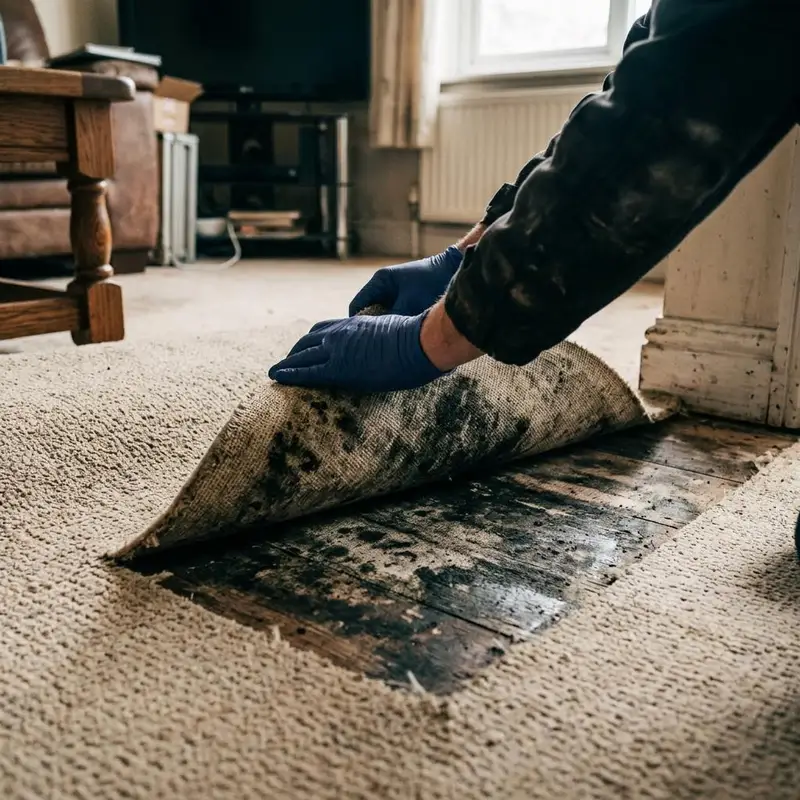
Do not rely on guesswork here. Use a moisture meter to check not just the carpet surface but also the carpet pad and the subfloor drying progress. A moisture meter gives you a number, not a feeling. If the subfloor still reads above 16 percent moisture content, you have more work to do. Many people stop too early, thinking the carpet feels dry, but the pad underneath stays wet and starts to rot.
When to Pull the Carpet and Replace the Pad
Sometimes water damage carpet drying can save the carpet, but not always. If the water was clean and you start extraction within a few hours, you can often save the carpet itself. But the carpet pad is a different story. Pads are spongy, absorbent, and slow to dry. Even after professional drying, a pad can trap moisture against the subfloor. In most flood damage restoration jobs I have seen, the pad gets replaced. It is a cheap part of the system compared to the risk of mold growth underneath.
If you decide to keep the carpet, you still need to lift it to dry the subfloor. That means pulling the carpet back from the tack strips, removing the wet pad, and setting up air movers and dehumidifiers to dry the subfloor and the underside of the carpet. A professional carpet dryer, which is basically a high-output air mover with a heating element, can speed this up. But heat must be used carefully. Too much heat can dry the carpet too fast on top while moisture stays trapped below, or it can damage synthetic fibers.
Once the subfloor reads dry on a moisture meter, you can install new carpet pad and lay the carpet back down. This is the point where some people skip a step. They put the carpet back without treating the subfloor with an anti-microbial treatment or a bactericide. That is a mistake. Even if the subfloor is dry, any residual organic matter can feed future mold. A spray-on anti-microbial treatment adds a layer of protection.
Mold Inspection and Remediation: What to Look For
If you have ever seen black spots on carpet or drywall near a water stain, you know how fast mold spreads. But mold does not always announce itself. A mold inspection by a trained professional uses tools like moisture meters, infrared cameras, and sometimes air sampling to find hidden moisture and mold. That is especially important after water damage carpet drying, because the carpet can look clean while the pad or subfloor harbors mold spores.
Mold remediation is a separate process from simple cleaning. Remediation means removing or containing mold growth and addressing the moisture source. It often involves HEPA vacuuming to capture spores, sealing off the work area, and sometimes removing sections of carpet or drywall. If you have a small patch of mold on carpet, a carpet cleaning with hot water extraction and an anti-microbial agent might be enough. But if you see Stachybotrys chartarum, which looks like dark greenish-black slime, you need professional remediation. That mold does not just wipe away.
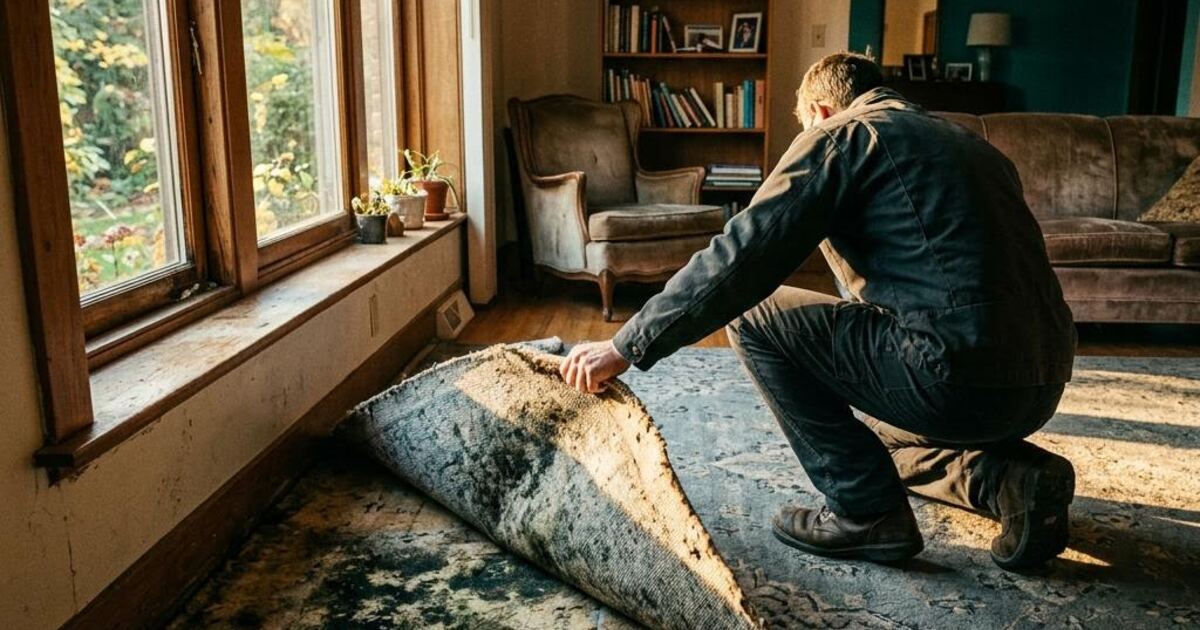
One technique that has gained traction in mold remediation is encapsulation. This involves applying a sealant that bonds to the mold spores and prevents them from becoming airborne. Encapsulation is not a substitute for removal, but it can be useful in situations where complete removal is not possible, such as on a structural beam. For carpets, though, removal is usually the better path.
Tools and Techniques for Faster Drying
Let me walk through the tools that make water damage carpet drying more effective. You do not need all of them for every job, but having the right combination saves time and reduces the risk of mold.
- Air movers: These are high-velocity fans designed to move large volumes of air across a surface. Place them at floor level, angled across the wet carpet. Do not point them straight down; that just blows water into the pad.
- Dehumidifiers: A refrigerant dehumidifier works well in warm conditions. A desiccant dehumidifier works better in cool or cold spaces. For carpet drying, you want to keep relative humidity below 50 percent during the drying process.
- Moisture meters: Pin-type meters measure moisture content in wood subfloors. Pinless meters can scan carpet and pad. Both are useful. Do not trust the dry feel of your hand.
- HEPA vacuums: After drying, vacuum the carpet with a HEPA vacuum to pick up any settled spores or dust. This is not the same as a regular vacuum; HEPA filters trap particles down to 0.3 microns.
- Anti-microbial treatments: A spray or fog application of an anti-microbial agent on the subfloor and the back of the carpet before reinstalling. Some products combine a bactericide and a fungicide in one bottle.
Another tool you might see is an ozone treatment machine. Ozone generators produce ozone gas that can kill mold spores and bacteria in the air and on surfaces. But ozone can also degrade carpet fibers and rubber backing, and it is hazardous to breathe. I only recommend ozone treatment in unoccupied spaces and as a supplement to physical cleaning, not a replacement. It is more common in flood damage restoration for large commercial spaces than for a single room in a home.
Carpet steam cleaning is sometimes used after drying to remove dirt and residue. But steam cleaning adds moisture back into the carpet. If you steam clean, you need to go through the drying process again. I prefer to dry first, then do a low-moisture encapsulation cleaning if needed, or simply use a HEPA vacuum and spot treatment.
When to Call a Professional
There is a limit to what a homeowner can do with rented equipment. If the water damage covers a large area, if the water was contaminated (like sewage backup or floodwater), or if you already see mold growth, call a professional. A company that specializes in mold remediation and water damage restoration has commercial-grade air movers, dehumidifiers, and the experience to know when a carpet is salvageable and when it needs to be removed.
Professional services also include mold inspection as part of the drying process. They check for hidden moisture in walls, under baseboards, and in the subfloor. They understand that water damage carpet drying is just one piece of a larger puzzle. If the subfloor stays wet, the mold will come back. If the baseboards are soaked, they need to come off. If the drywall wicked water from the floor up, you might need to cut it out.
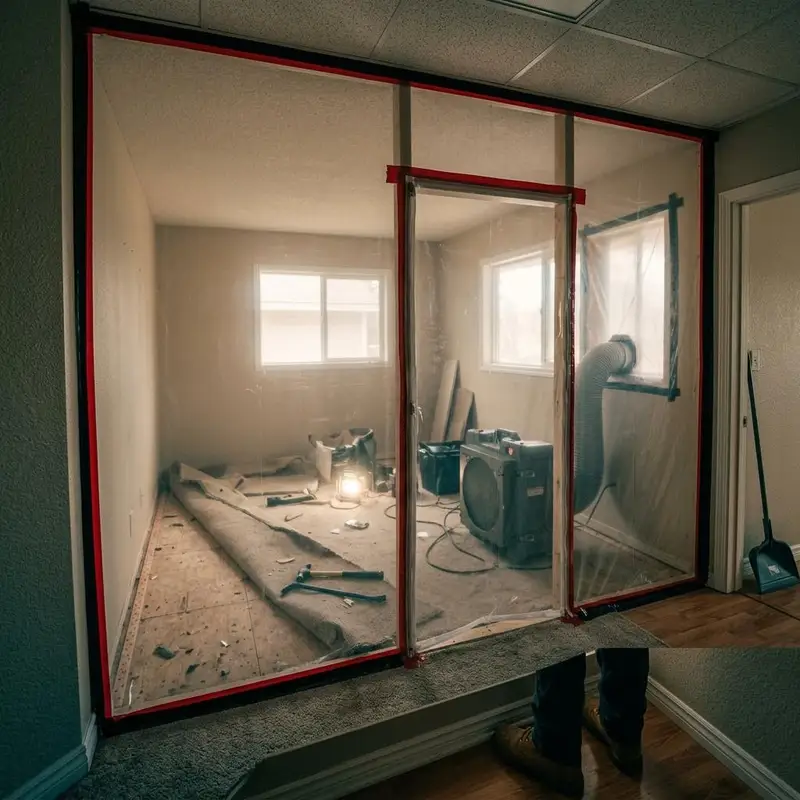
One thing I have learned from years in this field is that people often underestimate how much water a carpet holds. A typical wall-to-wall carpet can hold several gallons of water per square yard. Removing that water requires more than towels and a fan. It requires extraction, airflow, dehumidification, and patience. The phrase "water damage carpet drying" might sound like a simple task, but it involves a whole system of steps that must happen in the right order. Skipping any one of them can lead to mold growth that costs far more to fix than the original drying job.
If you decide to handle it yourself, at least rent a commercial-grade dehumidifier and an air mover. Check the carpet pad and subfloor with a moisture meter. And if the carpet smells musty after a few days, even if it looks dry, do not ignore it. That smell is the first sign of microbial growth. At that point, call someone who does mold remediation for a living. Your health and your home are worth it.